
How Do I Lower the pH in My Pool?
Short answer
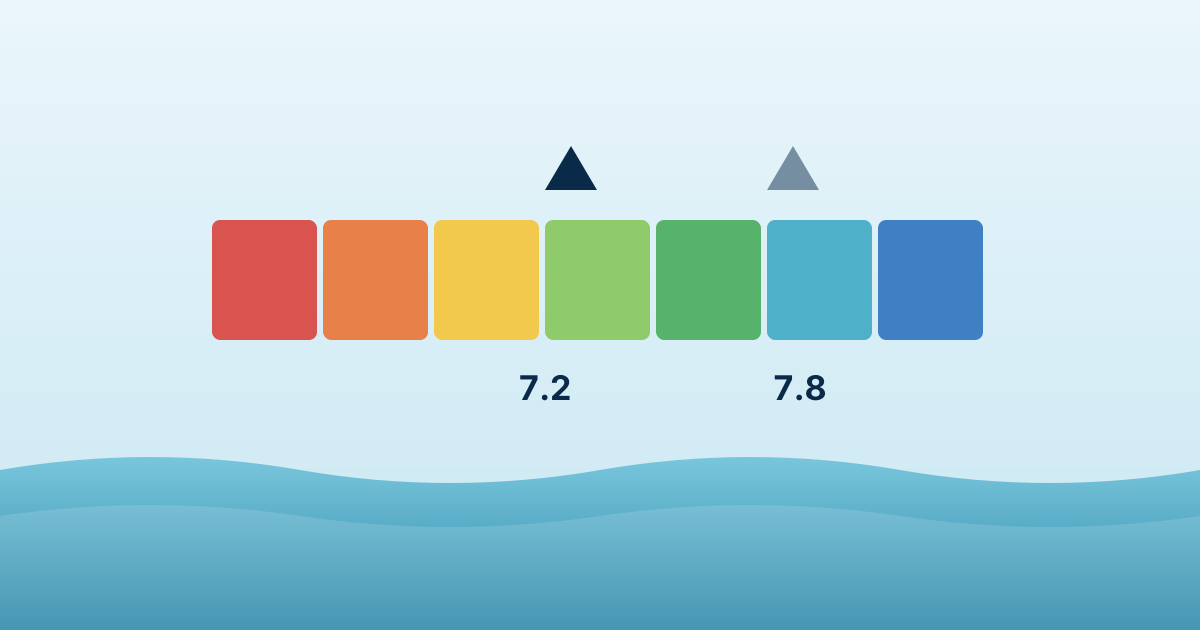
Lower pool pH by adding muriatic acid or dry acid (sodium bisulfate) with the pump running. Roughly 12 fluid ounces of 31.45 percent muriatic acid per 10,000 gallons lowers pH about 0.2. Add it slowly to the deep end, circulate for four to six hours, then retest before adding more.
To lower pool pH, add muriatic acid (hydrochloric acid) or dry acid (sodium bisulfate) with the pump running on high. As a starting dose, about 12 fluid ounces of 31.45 percent muriatic acid per 10,000 gallons will drop pH roughly 0.2 points. Circulate four to six hours, retest, and repeat only if needed.
Never add acid all at once trying to hit the number in a single shot. Overshooting into acidic water does real damage, and correcting back the other way just burns chemicals.
Which acid to use
Muriatic acid is the standard. It is fast, inexpensive, and lowers both pH and total alkalinity. It is also genuinely dangerous liquid acid that fumes, so it demands respect.
Dry acid (sodium bisulfate) is a granular powder that is easier and safer to handle. It works the same way chemically but adds sulfates to the water. Sulfates accumulate and can eventually attack plaster and stainless, so dry acid is better suited to occasional corrections than routine weekly dosing.
How to add it correctly
- Test pH and total alkalinity first. Write the numbers down.
- Run the pump on high so water is circulating.
- Measure the dose. Do not eyeball it out of the jug.
- Walk to the deep end and pour slowly, close to the water surface, into the return flow. Some techs prefer diluting acid into a bucket of water first. If you do that, always add acid to water, never water to acid.
- Keep the pump running at least four hours, then retest.
Do not pour acid into the skimmer. It sends a concentrated slug straight through your pump, heater and filter, and it will shorten their lives.
Safety, plainly
- Wear eye protection and chemical gloves
- Stand upwind and never lean over the jug
- Store acid separately from chlorine, and never mix them (the reaction releases chlorine gas)
- Keep swimmers out until pH is back in range and confirmed by test
- Rinse any spills on the deck immediately, since acid will stain and etch coping
Watch alkalinity while you do it
Muriatic acid lowers pH and total alkalinity together, so a pool with high pH but already low alkalinity is tricky. If alkalinity is under 80 ppm, dropping pH with acid can push it further down and your pH will then bounce uncontrollably.
The standard approach when both are high is to add acid in stages, let the water aerate between doses (a fountain, spa jets or the return pointed upward), and let aeration bring pH back up while alkalinity stays down. Aim for 80 to 120 ppm alkalinity and pH 7.4 to 7.6.
Why pH keeps climbing back
If you are chasing pH every week, something is pushing it up:
- Saltwater chlorine generators naturally drive pH upward as a byproduct
- Waterfalls, fountains, spa jets and aerators drive off carbon dioxide and raise pH
- Fresh plaster leaches for the first six to twelve months
- Total alkalinity above 120 ppm resists correction and pulls pH back up
- Liquid chlorine and cal-hypo both have a high pH
Fixing the cause beats dosing the symptom. Lowering alkalinity into range usually calms the whole system down.
Key West conditions
Our fill water arrives from the Florida Keys Aqueduct Authority carrying its own alkalinity load, and with year-round heat, evaporation and constant top-offs, Keys pools take on that water continuously. The practical result is a steady upward pull on pH that mainland owners rarely deal with.
Salt systems are common here too, and combined with FKAA source water, weekly acid demand on an island pool is normal rather than a sign that something is broken. Storm season adds another wrinkle, since heavy rain can dilute a pool overnight and leave your morning readings looking nothing like yesterday’s.
Add acid in measured stages and retest before the next dose, because the pool that swings past your target is harder to fix than the one that takes an extra day to get there.
Related questions
- how much muriatic acid to lower pool pH
- how to bring down high pool pH
- lower pool pH fast