
Do Saltwater Pools Still Need Chlorine?
Short answer
Yes. A saltwater pool is a chlorine pool that generates its own chlorine from dissolved salt by electrolysis, so the water is sanitized by exactly the same chemical as any other pool. You will still add chlorine manually to shock after storms, algae blooms or heavy bather load.
Yes, absolutely. A saltwater pool is a chlorine pool. The only difference is where the chlorine comes from. Instead of you pouring it in, the salt cell manufactures it continuously from the salt already dissolved in the water.
The idea that salt pools are chlorine free is the single most persistent myth in pool ownership, and it leads people to misdiagnose problems and skip testing they still need to do.
How the chlorine gets there
Salt is sodium chloride. The cell passes a low voltage current through the flowing water, which pulls chloride ions out of solution and converts them into hypochlorous acid, the same active sanitizer produced when liquid chlorine or a trichlor tablet dissolves in water.
After that chlorine oxidizes contaminants, it reverts back to chloride and returns to the pool as salt. So the salt is a reservoir, not a consumable, which is why salinity stays roughly stable while chlorine is being produced around the clock.
Your target free chlorine in a salt pool is the same as any pool, generally 2 to 4 ppm.
When you still add chlorine by hand
The generator handles daily baseline demand. It is not built for surges, and it is not fast.
Add chlorine manually when:
- The pool has algae. A bloom needs a large, immediate dose. The cell’s boost mode cannot deliver enough chlorine quickly enough to break a real bloom.
- A heavy storm dumps organics, debris and diluted water into the pool.
- You have had a large bather load, a party, or any contamination event.
- Combined chloramines are elevated and the pool needs a proper breakpoint shock.
- The cell is down for cleaning, repair or replacement. The pool still needs sanitizer during that window.
Liquid chlorine is the usual choice for salt pools because it does not add stabilizer or calcium.
The chemistry that keeps generated chlorine working
Cyanuric acid matters more here than in a traditional pool. Because the cell produces small amounts continuously rather than a big slug, and sunlight destroys unprotected chlorine quickly, salt pools generally target 60 to 80 ppm stabilizer. Too low and the sun burns off production as fast as the cell makes it. Too high and chlorine becomes sluggish.
pH matters as much as ever, because chlorine effectiveness depends on it, and salt systems push pH upward as a byproduct. Hold 7.4 to 7.6.
Salinity itself should sit where your unit specifies, usually 2700 to 3400 ppm. And keep in mind the cell is consumable hardware with a service life of roughly three to seven years, so declining chlorine may simply mean the cell is finished.
If the plates are visibly scaled, they can be soaked in a 4 to 1 water to muriatic acid solution for 10 to 15 minutes. Always add acid to water, never the reverse, wear splash goggles and gloves, work outdoors and never mix acid with any chlorine product.
Why this myth causes real problems
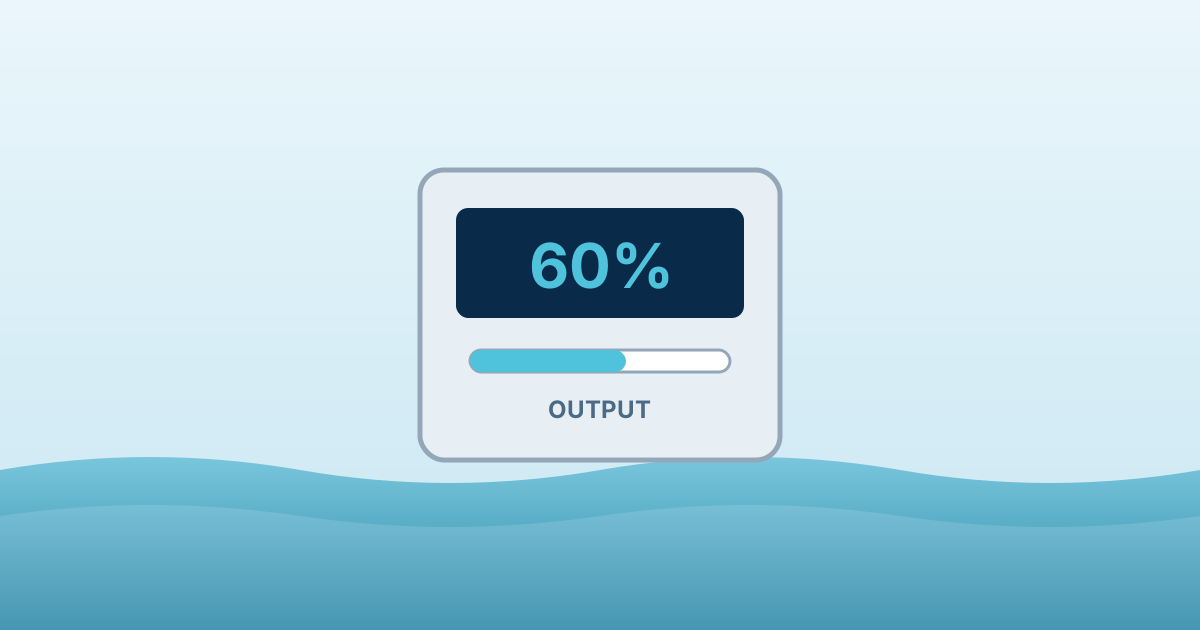
Owners who believe their pool is chlorine free stop testing chlorine. They assume the panel percentage equals sanitizer in the water, which it does not, since output is a production setting and free chlorine is a result. Then a bloom appears and they turn the output up instead of shocking, which loses days.
Test free chlorine weekly at minimum with a proper kit. The cell tells you what it is trying to do. The test tells you what actually happened.
Chlorine demand in Key West
Our UV index is punishing and it runs high for most of the year. Sunlight is the biggest destroyer of free chlorine anywhere, and here it works on a pool nearly every day with no seasonal break, so chlorine demand on this island is genuinely higher than in most of the country.
That means our salt cells run at higher output percentages for more hours, stabilizer levels need real attention, and manual shocking after summer storms is routine rather than exceptional. A generator sized for a mainland pool of the same volume can find itself short here in August.
Treat your salt pool as the chlorine pool it is, and test the water on the same schedule you would for any other pool.
Related questions
- do salt pools have chlorine in them
- is a saltwater pool really chlorine free
- does a salt water pool need chlorine added