
Are Variable Speed Pool Pumps Worth the Money?
Short answer
Yes for nearly every residential pool. A variable speed pump costs more upfront but cuts pump energy use substantially, runs much quieter, and filters better by moving water slowly. Florida also requires variable speed on most residential pump replacements, so it is generally the option available anyway.
For almost every residential pool, yes. Variable speed pumps cost more to buy but use dramatically less electricity, run far quieter and actually filter better than the single speed pumps they replace. Florida also requires variable speed on most residential pump replacements, so when your old pump dies this is largely the category you will be shopping in.
The reason the savings are so large is physics, not marketing, and it is worth understanding.
Why the energy savings are so big
Power draw does not fall in proportion to speed. It falls much faster. Cutting a pump’s speed roughly in half reduces flow by about half, but reduces power consumption to a small fraction of what it was.
The practical consequence is that running a variable speed pump slowly for 12 hours uses far less electricity than a single speed pump at full speed for 8 hours, even though the slow pump moves the same or more total water. Since pool pumps are among the largest electrical loads in a home, that difference shows up clearly on the bill.
Filtration actually improves
This is the benefit people do not expect. Water moving slowly through filter media spends more contact time with it and finer particles get captured, where a fast moving stream pushes small particles straight through. Slow, long circulation also distributes chlorine more evenly and eliminates the dead hours when a single speed pump is off.
Noise
A variable speed pump at low rpm is genuinely quiet, often quiet enough that you have to look at the pad to confirm it is running. Where equipment sits near a bedroom window or a neighbor’s fence line, this is the benefit owners mention first.
How to set one up
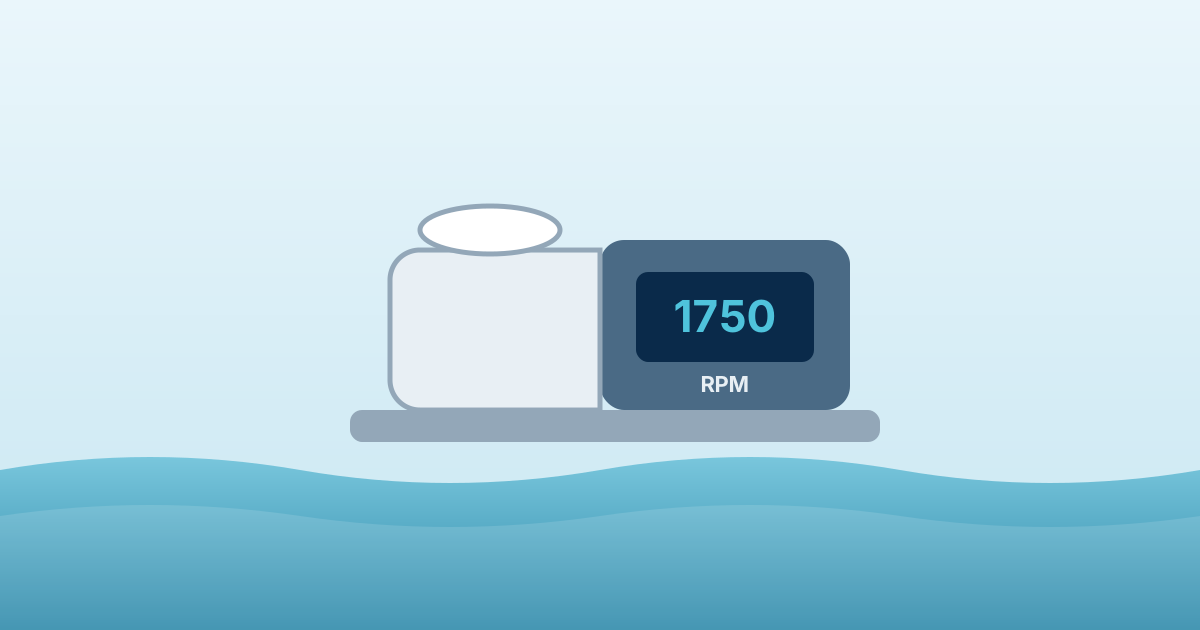
- Set a long base schedule at low speed, commonly somewhere between 1200 and 1800 rpm, for the bulk of the day.
- Confirm you are achieving at least one full turnover of the pool volume per day at that speed. Total run time will typically land in the 8 to 12 hour range or longer.
- Add short high speed periods only where you need flow: vacuuming, spa jets, in-floor cleaning heads, waterfalls, or priming.
- If you run a salt chlorine generator or a heater, verify the low speed still meets the minimum flow those devices require.
- Record a filter pressure baseline for each speed you use regularly, since pressure readings differ by speed.
The most common mistake is leaving the pump at high speed because that is how the old one ran. A variable speed pump running high all day saves nothing.
The honest downsides
- Higher purchase price than a single speed pump
- More electronics, meaning a control board that can fail, with repairs costing more than a capacitor swap
- Drive electronics dislike heat, moisture and voltage irregularity, which matters in a coastal environment
What this means in the Florida Keys
Two Keys realities push in opposite directions here, and both are worth knowing.
In favor: there is no off-season on this island. Pools run near full schedules all twelve months, so we accumulate more pump hours per year than a seasonal mainland pool does. More hours means the energy savings accrue faster here than almost anywhere else in the country.
Against: airborne salt reaches equipment pads across the whole island, including at freshwater pools, and variable speed drives have electronics that salt air attacks. Equipment lifespans run shorter here across the board. That is an argument for protecting the pad, not for skipping the upgrade. Keep the drive out of direct spray and direct sun, make sure the pad drains and sits high enough for your flood zone, and rinse the housing with fresh water periodically.
Shut off the breaker before any work at the equipment pad, and have a licensed professional handle the wiring on a variable speed installation, since these units are typically 240 volt and often need a dedicated circuit.
If you are replacing a failed pump anyway, the variable speed decision is already close to made for you, so put the effort into programming it correctly rather than into whether to buy one.
Related questions
- are variable speed pool pumps really worth it
- do variable speed pool pumps save money
- single speed vs variable speed pool pump