
What Is Black Algae in a Pool and How Do I Remove It?
Short answer
Black algae is a rooted cyanobacteria that forms dark spots with a protective outer layer, letting it survive normal chlorine levels. Removal requires scrubbing each spot with a stainless or pumice brush to break that layer, then holding free chlorine at shock level for several days.
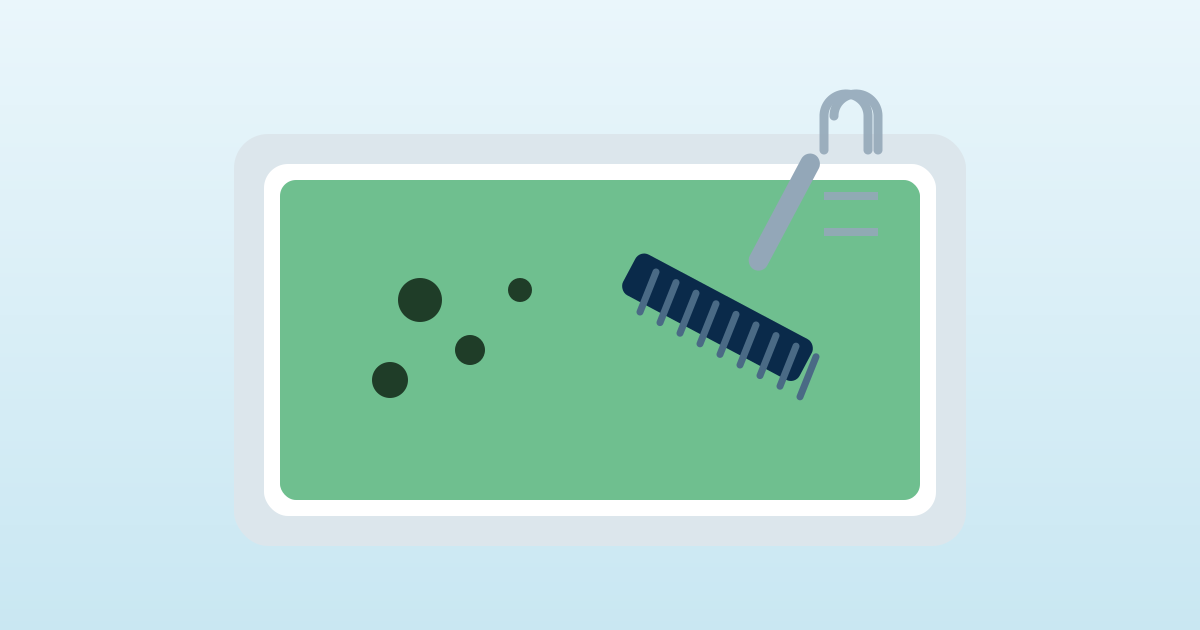
Black algae is not really algae. It is a cyanobacteria that puts down roots into plaster and grout and covers itself with a waxy protective layer, which is why chlorine at normal levels does almost nothing to it. It shows up as dark blue- black or dark green spots, often the size of a pencil eraser to a quarter, and it does not brush away like green algae does.
How to identify it
- Dark raised spots that feel firm, usually in rough plaster, grout lines, corners, steps and light niches
- Will not wipe off with a normal nylon brush
- If you scrape one off, a light or pink spot is left behind where it was rooted
- Water can be perfectly clear while black algae sits on the walls
Concrete, gunite and plaster pools are most at risk because the porous surface gives the roots somewhere to anchor. Fiberglass and vinyl pools rarely get it.
Removal, step by step
1. Balance the water. pH 7.2 to 7.4, total alkalinity 80 to 120 ppm. Check cyanuric acid, because it sets your shock target.
2. Break the protective cap. This is the part that actually matters. Scrub every spot hard with a stainless steel algae brush on plaster or gunite (never on vinyl or fiberglass; use nylon there). A pumice stone works on stubborn spots on plaster. You are trying to physically tear the outer layer open so chlorine can reach the roots.
3. Spot-treat. Many technicians rub a trichlor tablet directly onto each scrubbed spot, or press chlorine paste into it, to deliver a concentrated dose right where the roots are.
4. Shock and hold. Raise free chlorine to about 40 percent of your CYA level (roughly 12 ppm at CYA 30, 20 ppm at CYA 50) and hold it there for several days, retesting and re-dosing at least twice a day. One gallon of 12.5 percent liquid chlorine raises 10,000 gallons about 12 ppm.
5. Rebrush daily. New spots and regrowth get scrubbed the same way. Run the pump 24 hours a day and clean the filter as pressure climbs.
6. Follow with a preventive. A polyquat 60 algaecide on a regular schedule helps keep it from re-establishing once the pool is clean.
Expect this to take one to two weeks and to require repeated passes. Black algae that has been present for years may leave the plaster pitted, and a badly infested pool sometimes needs an acid wash or resurfacing to fully resolve.
What lets it take hold
Poor circulation, rough or worn plaster, low chlorine over a long period, and introduction from lake or ocean water on swimsuits and gear. Once it is established, weekly maintenance chlorine will not remove it, only sustained shock levels and mechanical scrubbing will.
Why Key West pools are vulnerable
Salt air and constant sun are hard on plaster, and worn, chalky or etched surfaces give black algae exactly the porous footing it needs. We also swim in the ocean here and then get in the pool, which is a genuine introduction route for this organism. With no cold season to slow anything down, an infestation that starts in one corner in spring can be across the shallow end by fall. Older Old Town pools with original plaster are the ones we treat most often.
If you find one black spot, treat the whole pool, because by the time a spot is visible the roots are already established nearby.
Related questions
- how to get rid of black algae in pool
- what causes black algae in a swimming pool
- how to kill black algae on pool walls